



Blog
Sliding vs Hinged Wardrobe: Which Is Better for Your Bedroom in 2026?

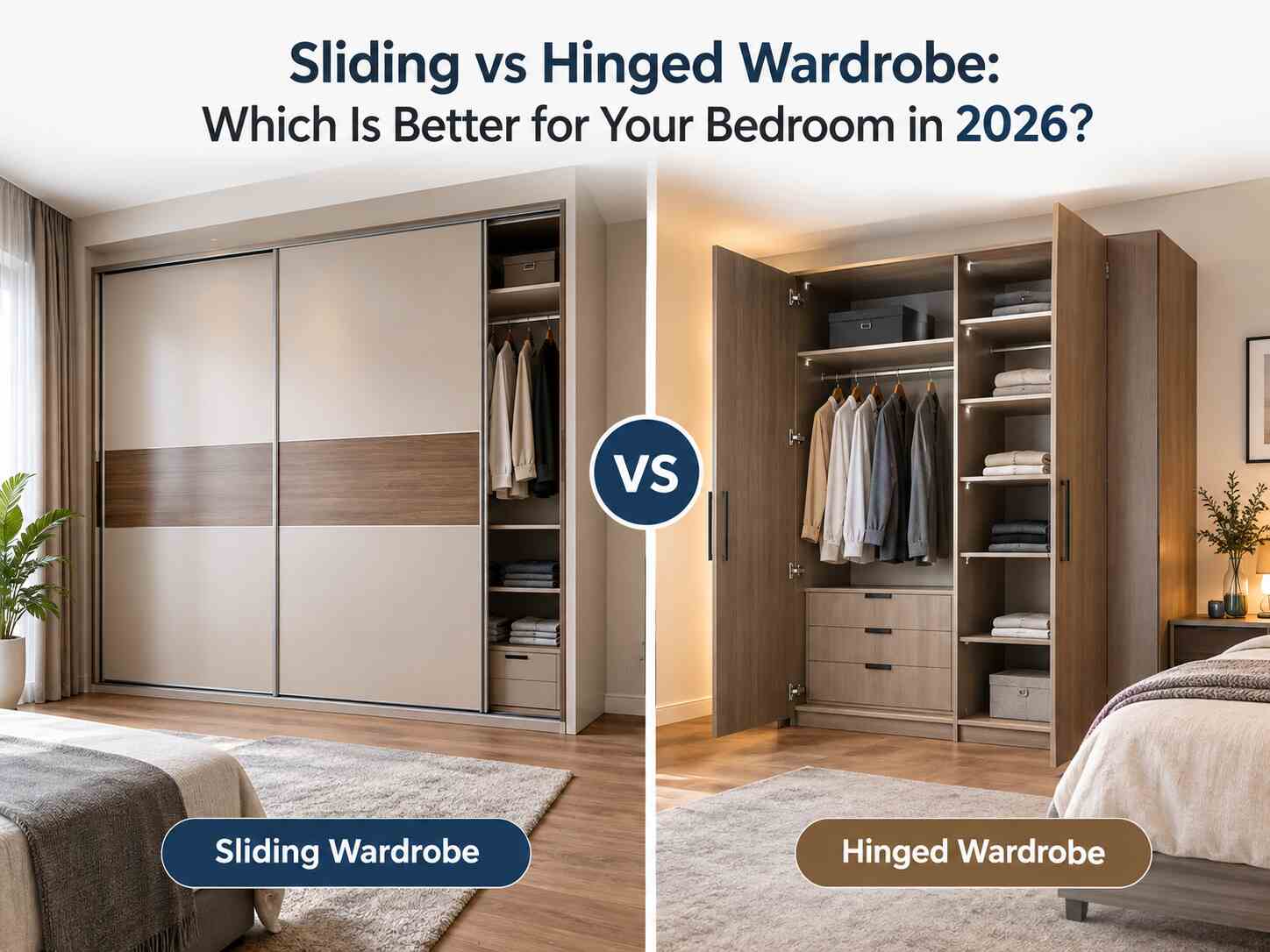
Choosing a wardrobe sounds simple until you start comparing door styles, storage layouts, finishes and the amount of space your bedroom actually has. If you are researching a sliding vs hinged wardrobe, the right choice depends less on what looks trendy and more on how you use your bedroom. For homeowners comparing the best modular wardrobe dealers in West Delhi, the same question comes up often: should you choose doors that slide sideways or doors that open towards you?
The answer is not one-size-fits-all. A sliding wardrobe can work particularly well when floor space is limited, while a hinged wardrobe can make sense when you want complete access to the wardrobe interior. Both can form part of a well-planned modular wardrobe. The key is matching the design to your bedroom space, storage habits and available floor space.
Sliding vs Hinged Wardrobe: What Is the Difference?
The basic difference is the way the wardrobe doors operate.
A sliding wardrobe uses panels that move sideways along a sliding door track. The doors do not swing out into the room, which makes this format useful where the area in front of the wardrobe is limited.
A hinged wardrobe, also called a hinged door wardrobe, uses doors attached to hinges. The shutters swing outward when you open them. This requires clear space in front of the wardrobe, but it gives you broad visibility of the storage area when the doors are open.
IKEA’s wardrobe guidance makes the same practical distinction: sliding doors use space efficiently, while hinged doors need opening clearance but can provide all-at-once access.
So, the real question is not “Which wardrobe is better?” It is “Which wardrobe works better for my room?”
Also Read: Modern Small Open Kitchen Designs: 15 Smart & Stylish Ideas for Small Spaces
Sliding Wardrobe: Where It Makes Sense
A sliding door wardrobe can be a smart choice for a narrow bedroom or compact bedroom where every bit of floor space matters.
Because the doors move sideways, you do not need to reserve a large area for door opening. This can make it easier to position a bed, study table, dresser or other bedroom furniture closer to the wardrobe.
Another advantage is visual continuity. Large wardrobe shutters can create a clean, modern appearance, especially when you choose a simple finish or mirrored panels.
A good sliding system should also have a properly installed track and a reliable smooth sliding mechanism. The quality of the wardrobe hardware matters because the doors will be used frequently.
However, sliding doors have one practical limitation: you cannot normally open every section at exactly the same time. One door panel may cover part of the wardrobe while another is open.
That matters if you regularly want to see your entire wardrobe at once.
Hinged Wardrobe: Where It Makes Sense
A hinged wardrobe is the more traditional option, but traditional does not mean outdated.
Its biggest practical advantage is easy access. Open the wardrobe shutters and you can generally see a large portion of the interior at once. This can make it easier to organise clothing, compare outfits and reach different compartments.
Hinged doors can also work well in a larger bedroom where door opening does not interfere with the bed or other furniture.
Many modern hinged systems can include soft-close hinges, which help the doors close more gently and quietly. The choice of wardrobe hardware, internal fittings and door finish can also change the overall look considerably.
The main drawback is simple: you need enough clearance in front of the wardrobe for the doors to open properly. IKEA recommends measuring the available space and checking that hinged doors can open fully before choosing this type of storage.
In other words, a hinged wardrobe needs room to breathe.
Sliding vs Hinged Wardrobe: Quick Comparison
| Feature | Sliding Wardrobe | Hinged Wardrobe |
| Door movement | Sideways | Outward |
| Floor clearance | Lower requirement | Requires door-opening space |
| Best suited to | Compact or narrow rooms | Rooms with sufficient clearance |
| Access | One section may remain covered | Broad/full-width access when opened |
| Style | Clean, contemporary | Classic to contemporary |
| Maintenance focus | Sliding door tracks and rollers | Hinges and door alignment |
| Storage design | Highly customisable | Highly customisable |
| Bedroom planning | Useful where floor space is limited | Useful where opening clearance is available |
The table shows why there is no universal winner. Your room layout should make the decision.
Which Is Better for a Small Bedroom?
For a narrow bedroom, a sliding wardrobe often has a practical advantage because its doors do not swing into the room.
That saved clearance can be useful around the bed, walkway or dressing area. IKEA also identifies sliding wardrobes as a space-efficient option because they avoid the extra clearance required by hinged doors.
But do not judge a wardrobe only by its doors.
The internal wardrobe storage matters just as much. Before selecting the exterior, think about how much hanging space, shelving, drawers and accessory storage you actually need.
A beautiful wardrobe that cannot comfortably hold your clothes is just an expensive wall with excellent manners.
Which Is Better for Maximum Access?
Where visibility and access are important to you, then the hinged wardrobe has a definite edge.
When the doors are open, you will be able to view a greater portion of the inside of the wardrobe all at once. This can be especially helpful if you are organising clothes on a number of shelves, drawers and hanging areas.
While the sliding wardrobe is easy to access, it does have some overlap with its doors, which allows for some things to be out of sight when one of the doors is shut.
What About Bedroom Space and Layout?
Before choosing between the two, measure your bedroom carefully.
Check the wall width, ceiling height and wardrobe depth. Then look at the available floor space in front of the proposed wardrobe location.
Do not forget the corner space either. A wardrobe positioned beside a wall, window, pillar or another piece of furniture may need a more carefully planned layout.
IKEA’s storage guidance recommends measuring height, width and depth while also considering wall obstructions and other structural features before selecting a wardrobe.
This is where professional planning becomes useful. A built-in wardrobe, fitted wardrobe or custom wardrobe can be designed around the actual dimensions of your room instead of forcing a standard layout into an awkward space.
Sliding vs Hinged Wardrobe: Which Looks More Modern?
Both can support a modern wardrobe design.
Sliding wardrobes often create a broad, uninterrupted front that works well with contemporary interiors. Glass, mirrors, laminates and other finishes can change the appearance significantly.
Hinged wardrobes offer more individual door sections, which can create a different visual rhythm. They also provide plenty of scope for handles, colours, textures and panel designs.
The better option depends on the rest of your wardrobe interior design and bedroom décor.
A wardrobe should not look like it arrived from another house.
Consider the bed, flooring, wall colours, lighting and other furniture before selecting the wardrobe finish.
What Should You Check Before Buying?
Whether you choose sliding or hinged doors, focus on the complete storage system rather than the door style alone.
1. Measure First
Record the wall width, height and depth. Check obstacles such as skirting, switches, windows and furniture.
2. Plan Storage Around Your Lifestyle
Think about what you actually store. You may need hanging sections for shirts and dresses, shelves for folded clothing, drawers for smaller items and dedicated wardrobe accessories for everyday organisation.
3. Check the Hardware
For sliding designs, inspect the sliding door tracks and moving components. For hinged designs, look at the hinges and closing mechanism.
Good hardware contributes to everyday usability.
4. Consider Internal Organisation
A well-designed modular wardrobe design should make the inside as useful as the outside. Shelves, drawers, hanging rails and other internal elements should reflect your storage needs.
5. Think About Future Needs
Your wardrobe may stay with you for years. Consider whether your storage requirements could change before finalising the layout.
What About Walk-In and Built-In Wardrobes?
A Walk-in Wardrobe is a different category because it uses a dedicated dressing or storage area rather than simply placing a wardrobe against one bedroom wall.
A Built-in Wardrobe or fitted wardrobe can be more suitable when you want to use the available wall area efficiently and create a cohesive appearance.
The same sliding-versus-hinged decision can still apply. The available room, circulation space and storage requirements should guide the door choice.
For a custom project, a best modular wardrobe manufacturer in Delhi should first understand the room dimensions and storage requirements before recommending a door system.
How to Choose the Right Option in Delhi-NCR
Bedroom layouts can vary significantly between compact apartments and larger homes. That is why local planning matters more than simply copying a wardrobe picture from the internet.
If you are looking for the best modular wardrobe dealers in West Delhi, compare their design approach, material choices, hardware options, installation process and ability to customize the storage layout.
For homeowners considering Bakshi Kitchens & Interiors, the sensible starting point is to discuss the available wall area, room circulation and the type of storage you need. A best modular wardrobe manufacturer in Delhi should help you evaluate the practical choices rather than simply push one door style.
If your room has limited clearance, ask whether a sliding design would make better use of the space. If you have plenty of room and want broad access, ask whether a hinged design would work better.
Final Verdict: Sliding or Hinged Wardrobe?
Which is the better choice then? It all depends and there is no definite answer to the question whether a sliding or hinged wardrobe is better. Go for a sliding wardrobe if maximizing the floor space is important for you – it is perfect for small and narrow bedrooms. Hinged wardrobes should be chosen if sufficient clearance is available and you would like to have an easy access to the wardrobe interior. This is not the only factor to consider.
The best choice will be the one which will suit your room, storage needs and lifestyle best. If you would like to learn more about wardrobe options, Bakshi Kitchens & Interiors will be happy to help. Contact Us to discuss